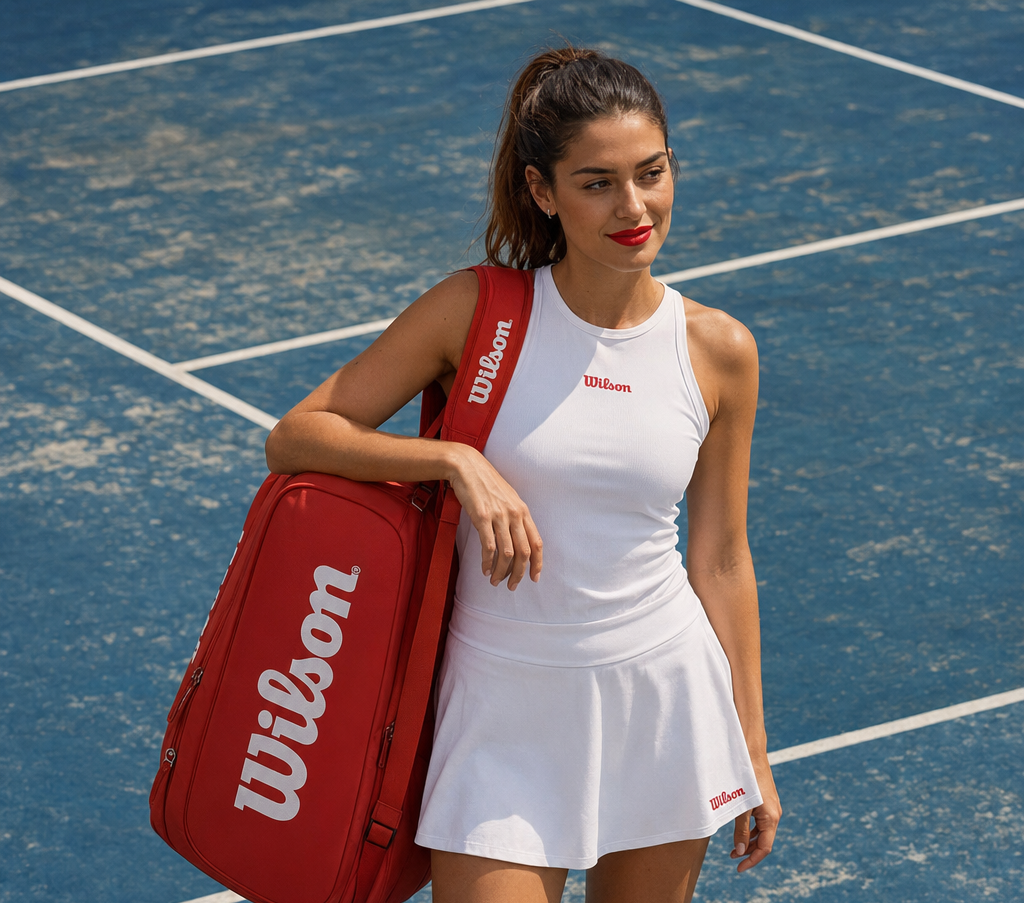
There is a reason the most memorable moments in tennis have always had a visual signature. The white pleated skirts at Wimbledon. The bold swoosh of eyeliner on a player walking out of the tunnel. The flash of a red lip caught by a courtside camera between points. Cherry red lipstick has never really been a beauty trend in tennis. It has been a constant, because it does something very specific: it signals that you showed up fully, not just athletically but as a person with presence.
That distinction matters in a sport where the margins between players are razor thin and the psychological dimension of how you carry yourself is genuinely part of the game. Wearing a cherry red lip on court is not vanity. It is armor.
The shade itself does a lot of the work. Cherry red sits in a particular sweet spot on the color spectrum, deeper and more complex than a flat fire engine red, with a purple undertone that gives it weight and sophistication. Think about the fruit itself: depending on ripeness, a cherry moves through coral brightness into deep berry territory. That range means the shade family is more versatile than people assume, and finding the right version for your coloring is closer to dialing in your string tension than picking a random tube off a shelf. It requires a little self knowledge.
For deeper skin tones, a cherry red that leans coral and bright tends to give the most vivid contrast and the most electric result. Warm undertones in the skin are flattered by a cherry with plum or raspberry in it, which brings out warmth without fighting it. Cooler undertones work beautifully with a grape leaning, deep berry cherry, which feels intentional and precise. Lighter complexions often find that a cherry softened with pink undertones lands best, reading as fresh and sharp rather than heavy.
Now the practical part, because looking good through a two hour match in summer heat is a genuine technical problem. Lips need to be exfoliated, hydrated, and primed before you apply anything. A primer is not optional here. It is the equivalent of a good warm up: it creates the conditions for everything else to perform. Without it, even the best formula will start to break down by the second set.
For finish, the conditions on court should drive the decision. A matte formula holds up better in heat and humidity and requires almost no maintenance, but it will punish dry lips, so hydration beforehand is non negotiable. A gloss delivers instant impact and a little extra fullness, but it needs a touch up during changeovers to stay sharp. Think of it as the difference between a reliable baseline game and a high risk, high reward net approach. Both can win. Know which one suits your situation.
Application technique is worth thinking about too. Straight from the bullet gives full, even coverage. A lip brush gives precision, which matters more with a pigment this strong. The French press method, pushing the color in with a fingertip and concentrating saturation at the center while letting it diffuse toward the edges, creates a softer, more lived in result that still reads as intentional from a distance.
The cherry red lip has outlasted every trend cycle in tennis because it is not really about being fashionable. It is about showing up with conviction. On a court or off one, that always reads.
